
The Way Home: The child who still lives inside us
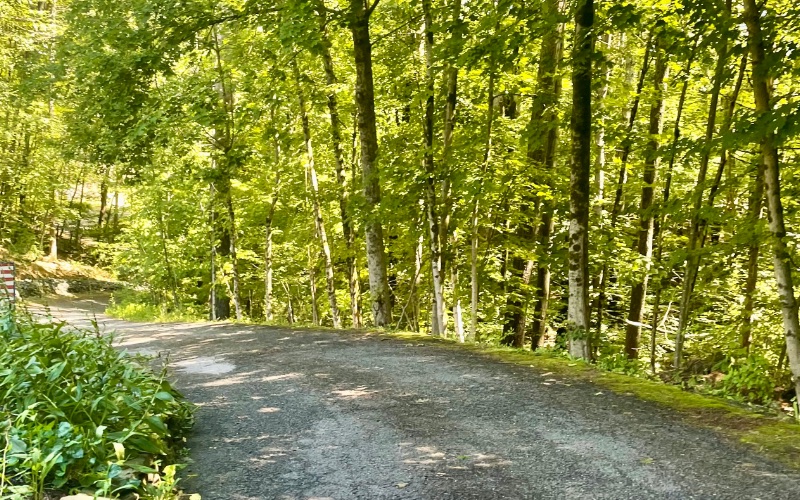
The Way Home
The child who still lives inside us.
I came back to visit my family in the US and it woke every sleeping dog. Sometimes finding your voice begins by taking the frightened child inside you by the hand and simply listening to her.
I thought I was done with that little girl. After years of therapy, recovering from binge eating, bed-hopping and alcohol. After decades of building a life in Europe, finding work I love, marrying a man who has stood beside me for nearly thirty years. At seventy-two, I honestly believed I’d made peace with those old ghosts. Apparently, she still lives and grieves and hungers inside me.
I flew back to the United States last week for the first time in quite a while. I was nervous before I left. Partly because of the political climate and the stories of travelers being detained, partly because going home has never really felt like going home.
I grew up in a family of four children. The stories and photographs show me spending my first year adored. There are pictures of my mother and me in matching cowgirl outfits, overalls and polka-dot scarves, her face turned toward me with unmistakable devotion.
Then, in four short years, three brothers arrived.
I’m not blaming anyone. Babies are born. Families grow. Parents become overwhelmed. But somewhere in that swirl, something inside me quietly concluded: You’ve lost your place. You don’t belong and never will.
Whether that story is entirely true almost doesn’t matter. My nervous system believed it. For as long as I can remember, I’ve carried an almost cellular certainty that I wasn’t really wanted. I have memories of standing outside friends’ bedroom doors, unable to walk in until they begged me, reassured me it was okay.
Even when I got that reassurance and permission, it never lasted. So I’ve been moving ever since. Looking for places that feel close, but never quite finding home. Though when the channel is flowing through me either while teaching or singing or writing or walking in nature, I can forget the search.
Over the years I’ve moved thousands of miles away. First San Francisco. Then Norway. Distance has its own medicine. It lets you become someone new. Someone who doesn’t have to play the old role, or not quite as fully.
But families are remarkable time machines. You walk through the front door and your passport says seventy-two while your nervous system insists you’re four.
The first days of my visit were lovely. I spent time with one brother and his family, then another. My great-niece and great-nephew climbed onto my lap for songs and stories. They wanted me to trace letters on their backs, just as children have always loved. We laughed. We swam. We ate dinner together.
All fine. That’s the important part. Nothing happened.
Then my brother and his wife left for work, and I had the house to myself. I was supposed to spend the day finishing a novel and writing my weekly post for Substack.
Instead, I cried. Then cried some more. It was as though every ghost inside me decided to shriek at once. Loneliness is physical. Shame is physical. The conviction that I don’t belong, that I’m too odd and weird and wounded. That everyone would be better off without me, arrived with such force that it frightened me.
People who have never lived with old trauma sometimes imagine these feelings are thoughts you can simply argue with. They’re not. They’re weather. Storms. Tsunamis. They move through the body before the mind has a chance to explain anything.
My husband knows this can happen when I visit my family. He knows that places can awaken parts of us we thought we’d left behind. But he’s not here.
So I did the only thing I knew to do.
I went walking and walking, and walking.
It was raining. Mosquitoes were everywhere. I borrowed a pair of sneakers and trudged down a muddy country road under an umbrella, crying almost the entire way. No one to witness it but the trees.
I ranted into my phone because I couldn’t bear to keep all those voices raging inside my head.
I wanted someone to hold my hand. Not because I am weak. Because somewhere inside every adult still lives a child who remembers what it felt like not to be held.
That realization made me think about one of my singing students back in Oslo. She has a voice that could stop you in your tracks. Rich. Beautiful. Honest. And yet she keeps postponing her own life. Not because she lacks talent. “I’m still looking for that hand to hold, you know when you come off the stage. And a place to call home. Someone to reassure me: I am safe, I belong, I am heard.
Maybe that’s what all creative work is really about. Not perfecting our technique. Building an inner home sturdy enough that our voice dares to come out.
Children know this instinctively. My little great-nephew wants me to draw letters on his back. My great-niece climbs into my lap to invent songs. They reach for connection without embarrassment. Even their dog barks until we pet him.
Somewhere along the way adults decide we’re supposed to stop needing that. I’m no longer convinced that’s wisdom.
This morning I read something by Jeanette Winterson that landed exactly where I needed it.
“When we are constantly overwhelmed, it’s good to go back into the memory-box and ask: What am I responding to here? The present, this now, or the way I was treated, hurt, ignored in the past?”
That question changed something for me. Because nothing terrible had happened yesterday.
I wasn’t abandoned. I wasn’t rejected. I was responding to echoes.
As Carl Jung reminds us, what we bring into consciousness begins to lose its power over us. Not all at once. More like dawn arriving than a light switch being flipped.
I’ve had this experience before. Years ago I would have eaten my way through those feelings. Or drunk them away. I used to pack three different sizes of clothing whenever I visited my family because I never knew which version of myself would come home.
This time I cried and walked and talked with my husband. I even had an imaginary conversation with the late Ram Dass. You know how he used to say: You think you’re so realized? Go visit your mother. It felt good to laugh.
The feelings were just as real. But my response was different. Not immediately.
Perhaps healing isn’t reaching the place where we’re never triggered again. Perhaps healing is noticing that when the old story returns, we no longer hand it the steering wheel. Maybe we even offer an invisible hand to hold.
Not because the frightened and terribly sad child disappears. She doesn’t. But because, little by little, she begins to trust the grown woman who has come back for her. Who has finally come back to hold her hand.
She hears the words she’s waited a lifetime for: “I’m here now. You don’t have to disappear anymore. Come home.”