
Labels That Are Gifts
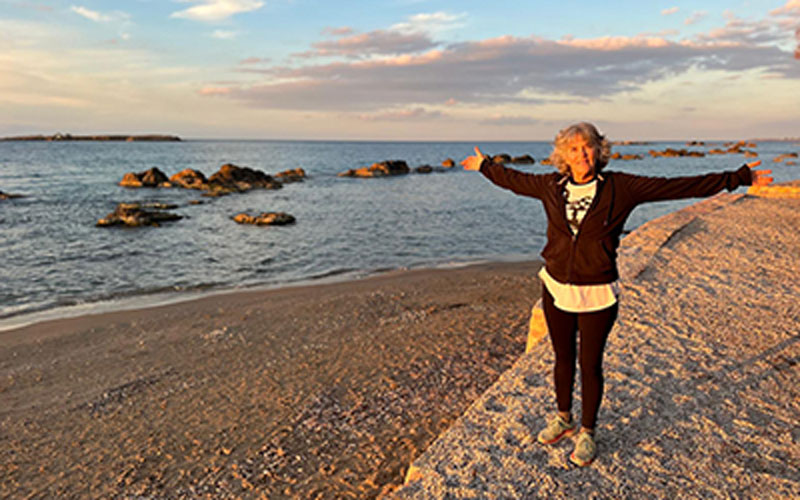
What are our options for managing what’s often seen as too much sensitivity in an increasingly chaotic world? During my life, I’ve been described as neurologically diverse, hypersensitive, and perhaps on the spectrum. In my youth, before these modern terms existed and long before I learned I was dyslexic, they labeled me as having personality disorders. Now, I resist these labels, just as my body resisted antidepressants, that never worked for me. Back then, I didn’t realize these were also my gifts.
On my good days, when I recognize and even love my sensitivities, I try to listen and honor them. Sometimes, it is by just pausing to breathe. Or, with more time, I could go for a walk and let my voice come out any way it pleases. Or go swimming, write, sing, and when in a safe space, shout, cry, or even bark like a dog! By doing these various activities, I allow what I actually feel to be released. This release echoes through myself, my world, my breath.
Yesterday, while teaching a workshop on the Alexander Technique and Vocal activation, I was reminded of the gifts my sensitivities bring. With my hands, I feel how the energy shifts. I gently guide the students toward a healthier way of using their energy. We are energy. It all depends on how we’re managing it. Are we holding in, or are we allowing flow? So often, our most vulnerable aspects get locked away—for protection. I am not the only sensitive one. Many of us, having long suppressed these sensitivities, now experience them as chronic pain. Moving away from patterns of holding in can work wonders to
Nearly all the students in the recent workshop were young dancers with persistent pain or resistance. For many, it was in the shoulders and neck, where tension refuses to release. As we worked through movement, mindset, and beliefs, we played with gravity, allowing it to support the art of letting go. Then, one by one, I used my hands to offer new information to their nervous systems as they moved or sang. It was beautiful to watch their faces shift—expressions of revelation and newfound awareness unfolding before me. All of us could witness an improvement in the resonance of their voices and spontaneity in their movements.
One young dancer, struggling with a painful hip injury, believed deep down that she wasn’t good enough to be a dancer. She loved to dance, but every move carried the weight of this false belief. Trying to protect herself from that fear, her body overcompensated—tightening, bracing, interfering. We played with what it might feel like to move without that belief. Using my hands, I guided her not just with words but through visceral experience, allowing her nervous system to feel the possibility of release.
What a transformation. Second by second, I watched a movie of emotions flicker across her face—wonder, relief, joy, moments of fear and surprise—like a child discovering for the first time how their fingers move. She re-challenged her system, in this state of curiosity and presence, breaking free from deeply ingrained patterns. It takes at least 15 minutes of steady focus to begin undoing a habit’s hold, but with each passing moment, her breath and movement grew freer.
Indeed, she’d injured herself by pushing through intensely, not giving time or space for what was really there. By acknowledging these feelings of doubt and releasing them into available energy (even if scary), the change was subtle yet immediate. Her body would still need time—days perhaps—to fully heal. By the end of the session, with new awareness, she was learning to allow her innate sensitivity to guide her. By continuing this deep listening, she was well on her way towards full recovery. It reminded me that being sensitive is a gift we can share with the world.